 LinkedIn














Innovation in lactose-free desserts: a new challenge
Lactose intolerance has become a major issue at the intersection of health and nutrition, both in terms of the number of people affected and its impact on dietary habits. In everyday life, the digestive sensitivity associated with this condition prompts many consumers to adapt their diets, with a key challenge in mind: preserving the joy of food while minimising adverse effects through lactose-free solutions.
Lactose intolerance
Lactose intolerance and allergy
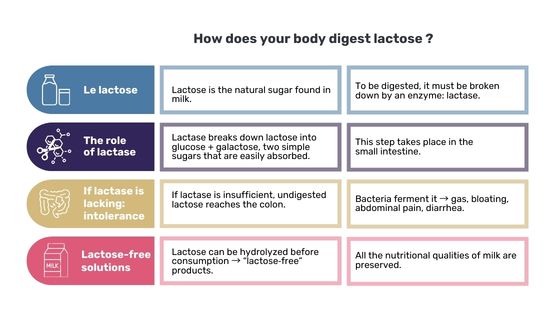
Lactose is the primary sugar naturally present in milk and dairy products. An enzyme called lactase is needed to digest lactose.[1]
When the body does not produce enough lactase, lactose is not fully digested in the small intestine and instead reaches the colon, where it is fermented by bacteria, leading to symptoms such as gas, diarrhoea and abdominal pain. This condition is known as lactose intolerance.[1]
There are three main types of lactose intolerance:
- The most common form, which results from a genetically programmed decline in lactase activity after early childhood (typically from the age of 2–3). It affects approximately 68% of the global population and leads to lactose malabsorption. The onset and severity of symptoms depend on both the amount of lactose consumed and individual genetic factors.[2]
- Congenital lactase deficiency, a rare genetic disorder, which is characterised by a complete absence of lactase activity from birth. In such cases, lactose must be strictly avoided throughout life.[1]
- Temporary lactose intolerance, caused by another disease such as gastroenteritis.[1]
It is important to note that lactose intolerance should not be confused with milk allergy, which is caused by an immune response to milk proteins rather than to lactose itself.[3]
The prevalence of lactose intolerance in France and worldwide
Lactose intolerance is unevenly distributed worldwide. In France, between 30% and 50% of adults experience incomplete lactose digestion, whereas in certain regions, particularly across Asia, the ability to digest lactose is almost non-existent.[4]
The risks of a dairy-free diet
Individuals with lactose intolerance often avoid lactose entirely, and therefore milk and many dairy products. This can result in insufficient intake of essential nutrients, particularly calcium and vitamin D.[2]
Inadequate consumption of these nutrients carries health risks, such as an increased likelihood of developing osteoporosis.[5]
Furthermore, as dairy is found in a large number of products (particularly desserts), many lactose-intolerant consumers may forgo products that are otherwise enjoyed and contribute to eating pleasure.
Innovation in lactose-free foods
The need to consume dairy products
A common approach adopted by many consumers is to eliminate dairy entirely and take calcium or vitamin D supplements (while others simply take lactase enzymes in tablet form). However, multiple organisations (such as the NMA, NIH, EFSA and FAO) advise against avoiding dairy products completely. Instead, they recommend that individuals with lactose intolerance adapt their diets to maintain nutrient intake.[3]
In lactose-free dairy production processes, the nutritional profile of the original product is fully preserved; only the form of the lactose is altered. Typically, the lactose is hydrolysed into glucose and galactose.[6]
Lactose-free milk, a product already adopted by the food industry
Lactose-free milk is already widely used in the food industry. It can be incorporated in the same way as regular milk for products such as yoghurts, desserts or milk-based beverages, without creating additional formulation challenges
Another industrial advantage is that, because lactose is broken down into glucose and galactose, less added sugar is required to achieve the same level of sweetness. This makes it easier to create products that can be labelled ‘low-sugar’.[7]
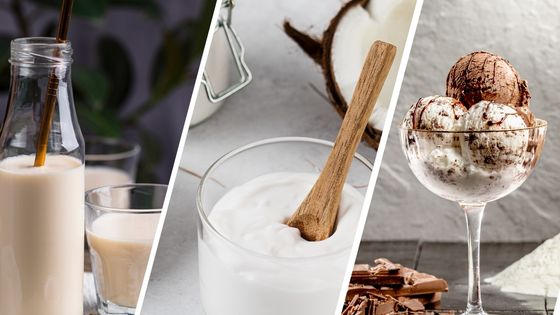
Pleasure at the heart of consumer concerns
Food trends in France and around the world are increasingly focused on pleasure: in 2024, 63.8% of food innovations in France were positioned around enjoyment, compared with 55.7% worldwide—an increase of 8.7% since 2023.[8]
Given the strong focus on food enjoyment in both French and international innovation, it is essential that lactose-free products deliver the same level of taste and pleasure as their lactose-containing counterparts.
Desserts as a source of food innovation
The dairy category presents significant opportunities for innovation, ranking fourth among the most innovative categories worldwide and in Europe in 2024.[8]
Aligned with the broader trend towards food enjoyment and the growing demand for lactose-free products, lactose-free desserts represent a highly promising segment in food innovation.
Moreover, relatively few innovative products currently exist in this category, leaving considerable room for new developments.[9]
Lactose-free milk powder for use in finished products
Lactalis Ingredients has developed a lactose-free skim milk powder (containing less than 0.1 g of lactose per 100 g of powder), produced from skim milk using enzymatic hydrolysis of lactose. This process preserves the authentic taste of milk while naturally imparting a slightly sweeter flavour compared with standard skim milk powder, due to the conversion of lactose into glucose and galactose.
This ingredient can be easily incorporated into the formulation of lactose-free products, enabling manufacturers to meet the expectations of lactose-intolerant consumers without compromising on taste.
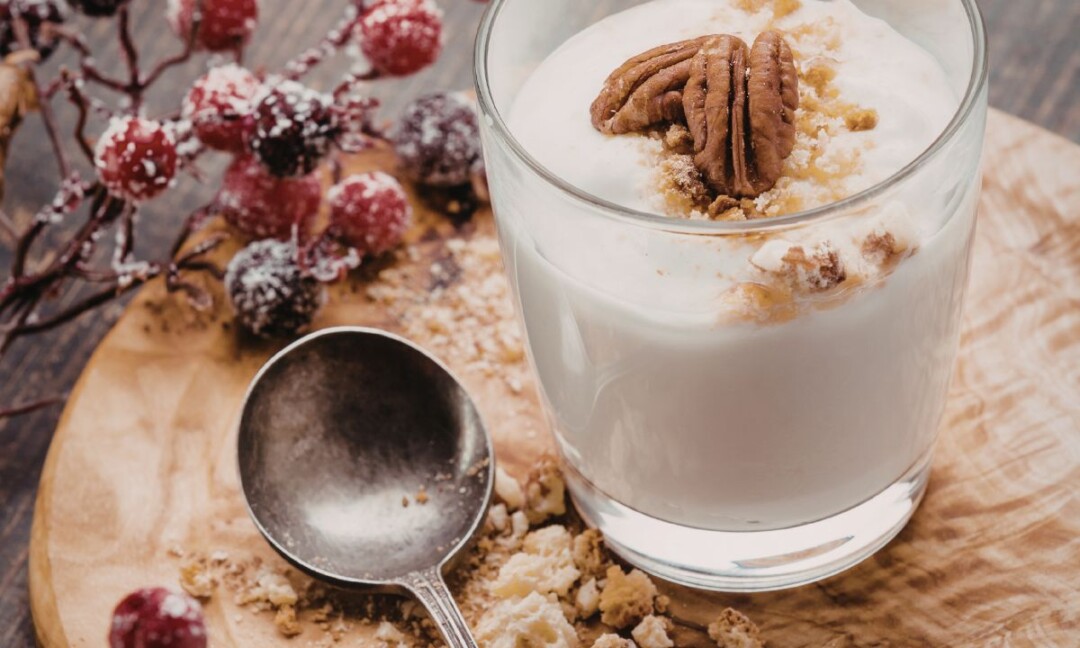
It is suitable for a wide range of traditional dessert applications, including creamy desserts, mousses, entremets, rice puddings, flans and chilled milk-based desserts.
Conclusion
While lactose intolerance affects a significant proportion of the population, it does not mean consumers must forgo dairy products or the enjoyment of food. Lactose-free solutions make it possible to preserve the full nutritional benefits of milk while addressing digestive sensitivities. In this context, lactose-free desserts are a true driver of innovation: by combining indulgence, texture and flavour, they deliver appealing and inclusive culinary experiences tailored to specific dietary requirements, without compromising on enjoyment.
A question ? Contact-us !
Sources:
[1]Intolérance au lactose | ameli.fr | Assuré
[2] https://www.niddk.nih.gov/health-information/digestive-diseases/lactose-intolerance/definition-facts
[3] WGOF_170707_WGO-YINICollaboration_WhiteBook_FINAL.pdf
[4] https://www.unige.ch/campus/numeros/97/recherche2/
[5] Ostéoporose – Troubles osseux, articulaires et musculaires – Manuels MSD pour le grand public
[6] https://www.tetrapak.com/fr-fr/solutions/categories/dairy/white-milk/lactose-free-milk-drinks
[7] https://www.dsm-firmenich.com/fr-fr/businesses/taste-texture-health/news-events/articles/health-well-being/the-science-behind-lactose-free-dairy.html
[8] Baromètre mondiale de l’Innovation 2025, ProtéinesXTC
[9] NewFoodData, ProteinesXTC