 LinkedIn

















Lactose: an unduly criticised sugar proven to provide major value in modern formulation strategies
Lactose is a naturally occurring sugar found in milk, yet it is frequently excluded from certain formulations and even specific market segments (notably nutraceuticals and sports nutrition). This is due to persistent concerns regarding its digestibility and symptoms sometimes associated with lactose consumption. However, beyond these perceptions, lactose offers a range of functional and nutritional attributes that position it as a valuable ingredient across multiple industrial sectors, spanning food, health and functional nutrition. Its distinctive physicochemical and nutritional properties make lactose suitable for use in a broad spectrum of food matrices, from biscuits and chocolate to infant formula and pharmaceutical applications.
Le lactose : what is it ?
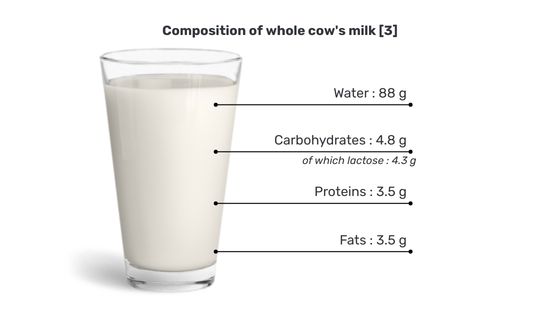
Lactose is a disaccharide composed of glucose and galactose. It is the principal carbohydrate naturally present in milk[1] and the second most abundant component after water. Unlike fat and protein, whose concentrations can fluctuate significantly, the lactose content of milk remains relatively stable[2], showing little variation according to the breed of cow or seasonal factors.
On an industrial scale, lactose is primarily derived from whey permeate, a by-product of cheese production and whey protein manufacturing obtained through a sequence of filtration, concentration, crystallisation, drying and milling processes. In the food industry, the most widely utilised form is crystalline (alpha-lactose monohydrate), which is the most stable solid-state form.
It is interesting to note that lactose has a markedly lower sweetening power than saccharose—approximately 0.4 compared with 1 for saccharose. This relatively mild sweetness represents a technological advantage: it confers functional properties without imparting excessive sweetness[4], making lactose a preferred bulking agent in numerous applications.
When the versatility of lactose meets the demands of diverse markets
Quality as a prerequisite in infant formula
In infant formula, lactose can constitute a substantial proportion of the formulation, representing up to 40–50% of milk-derived ingredients, depending on the stage of the formula (first, second or third stage). This is especially the case in formulations utilising PS80 (80% concentrated whey protein). The objective is to replicate the composition of human breast milk as closely as possible.
Biological benefits of lactose
- Source of energy: lactose provides an easily digestible source of energy for infants.
- Support for gut microbiota: multiple studies highlight the positive impact of lactose on infant gut microbiota, particularly by promoting the proliferation of beneficial bacteria such as Bifidobacteria and lactic acid bacteria, while limiting the growth of potentially pathogenic species such as Bacteroides and Clostridia[5].
- Contribution to physiological development: during digestion, lactose is hydrolysed into glucose and galactose. Galactose is crucial for the synthesis of galactolipids, including cerebrosides, which are key constituents of myelin[6]. Consequently, lactose plays an important role in the development of the infant central nervous system. It also supports calcium absorption, further contributing to optimal growth and bone development in infants[7].
When formulating with high levels of lactose—particularly in cases where lactose accounts for 45-50% of the formulation—vitamin B2 intake may exceed recommended thresholds. This effect can be further amplified in formulations incorporating WPC80, which contributes to an overall increase in lactose content. In such cases, using lactose with naturally low vitamin B2 content becomes especially pertinent[8].
Lastly, quality standards for infant nutrition are exceedingly stringent: lactose suppliers must guarantee an extremely high level of microbiological quality to meet regulatory and safety requirements.

A precursor to derivatives beneficial for human health
Lactose serves as both a raw material and a processing substrate in the production of a variety of derived ingredients, including galacto-oligosaccharides (GOS), human milk oligosaccharides (HMO) and lactulose, through controlled enzymatic or chemical processes[9]. These methods of transformation make it possible to create high added-value nutritional ingredients, suitable for the infant nutrition, nutraceutical and pharmaceutical markets.
When lactose helps to shape the texture and organoleptic properties of sweet products
In its crystalline alpha-lactose monohydrate form, lactose exhibits lower hygroscopicity than glucose or fructose[10]. These properties are highly valued in chocolate manufacturing, as well as in the production of sweetened condensed milk and confectionery. Lactose also functions as a nucleating agent, initiating the crystallisation of specific food matrices containing sugars or fats, thereby contributing to desirable texture and stability in products such as chocolate and sweetened condensed milk.
Lactose as a substrate in the fermentation industry
Lactose is an ideal substrate for lactic fermentation, as it promotes a reduction in pH. This environment encourages the growth of lactose-utilising bacteria, enabling a more consistent onset of fermentation and more uniform end results[11].
Milk standardisation
Milk standardisation is a process aimed at evening out seasonal variations in milk composition, such as excess fat or protein. Lactose and milk permeate are commonly used to standardise harvested milk, ensuring a consistent composition before it is processed into cheese, butter, yoghurt, and other dairy products.
Seasonal variations in milk composition are often influenced by multiple factors, including:
- Feed type (hay, pasture, silage, soy, etc.)
- Breed of the cow
- Stage of lactation
- Age of the cow
Maintaining consistent and uniform milk composition throughout the year is crucial to controlling production yields and ensuring predictable manufacturing parameters.
In pharmaceutical formulations
Lactose is extensively employed in medicines as an excipient. Primarily serving as a filler or binder, it is utilised in a range of oral dosage forms, including tablets, capsules and sachets, as well as in inhalation products. Pharmaceutical-grade lactose is specifically produced to meet stringent industry standards, offering versatility, neutrality and stability, making it ideally suited for the pharmaceutical market.
Lactalis Ingredients: a range designed to meet the requirements of diverse applications
High purity and controlled composition
- Lactose purity ranging from 99.2% to 99.6%
- Low protein and mineral content
- Guaranteed or low vitamin B2 levels
- Particle size ranging from 60 to 200 mesh
- Suitable for infant formula, compatible with both wet-mix and dry-mix processes
- Certified Kosher, Halal, and Vegetarian
- Available in pharmaceutical grade
Conclusion
Lactose is a highly versatile ingredient, prized for its diverse functional properties. It is suitable for a wide range of applications—as a fermentation substrate, a crystallisation agent, or for its biological attributes—making it an indispensable component across numerous food matrices. Backed by over 50 years of expertise and rigorous quality standards, Lactalis Ingredients is able to meet the precise requirements of sectors as varied as infant nutrition, pharmaceuticals and food applications.
A question ? Contact-us !
Sources:
[1] Walstra, Wouters & Geurts, Dairy Science and Technology, 2005
[2] Fox & McSweeney, Advanced Dairy Chemistry, Vol. 3: Lactose, 2009
[3] Ciqual, Lait entier (aliment moyen), consulté le 13/02/2026
[4] Belitz, H.-D., Grosch, W., & Schieberle, p.863, “Table 19.1 Sweeteners of carbohydrate origin” in Food Chemistry (4th ed.), 2009
[5] Francavilla R, Calasso M, Calace L, Siragusa S, Ndagijimana M, Vernocchi P, Brunetti L, Mancino G, Tedeschi G, Guerzoni E, Indrio F, Laghi L, Miniello VL, Gobbetti M, De Angelis M. Effect of lactose on gut microbiota and metabolome of infants with cow’s milk allergy. Pediatr Allergy Immunol. 2012 Aug;23(5):420-7.
[6] Marcus J, Popko B. Galactolipids are molecular determinants of myelin development and axo-glial organization. Biochim Biophys Acta. 2002 Dec 19;1573(3):406-13.
[7] Ilesanmi-Oyelere BL, Kruger MC. The Role of Milk Components, Pro-, Pre-, and Synbiotic Foods in Calcium Absorption and Bone Health Maintenance. Front Nutr. 2020 Sep 23;7:578702.
[8] Ph. Eur. : pharmacopée européenne, USP : pharmacopée des Etats-Unis
[9] Padilla et al., “Production of lactulose oligosaccharides by isomerisation …”, Journal of Dairy Research, 2015
[10]https://www.lactalisingredients.com/fr/news/blog/le-lactose-un-disacharride-aux-milles-facettes/, https://www.cerealsgrains.org/publications/cc/backissues/1973/Documents/chem50_512.pdf?
[11] Parvez S. et al., Probiotics and their fermented food products are beneficial for health, Journal of Applied Microbiology, 2006